
Five Years On: From Childhood Leukemia to Moyamoya Disease - A Mother's Practical Lessons from the Journey
Summary: A routine preschool health check first revealed an abnormal blood count in three-and-a-half-year-old Xiaojin (pseudonym), leading to a diagnosis of B-cell acute lymphoblastic leukemia. He went through chemotherapy, serious infection, and other treatment-related challenges, ultimately completing standard therapy and entering long-term remission. During recovery, a new set of symptoms led to another unexpected diagnosis: moyamoya disease, a rare cerebrovascular condition, for which he underwent surgery. Five years later, Xiaojin is growing well and back at school. Along the way, his mother has gone from an ordinary parent suddenly facing a frightening diagnosis to someone who has learned how to understand disease, manage treatment, ask questions, and support other families on the same road.
One Blood Test Changed Everything
Xiaojin is my only child. Before he was three and a half, he had hardly ever been sick. I never imagined that a routine preschool health check would change the course of our entire family's life.
On August 7, 2021, I took him for his preschool health check. When I saw the complete blood count, my heart sank: his hemoglobin was only 86 g/L, showing moderate anemia. The doctor simply told us that his blood results did not meet the requirement and that they could not issue the health certificate he needed to start preschool.
The next day was my birthday. All seven members of our family went away to a hot-spring resort. It was the last trip we would ever take together as a complete family. Even sitting in the warm water, I couldn't stop thinking about that test report with all the abnormal arrows.
On Monday, I immediately took my husband and Xiaojin to a tertiary hospital for repeat testing. The results were worse. After examining his abdomen, the doctor told us, "He needs to be admitted. There is a very high chance this is leukemia."
The moment I heard the word leukemia, everything started ringing in my ears. Earlier that year, my mother-in-law had been diagnosed with advanced stomach cancer. Within a single year, two serious illnesses had hit our ordinary family.
We didn't dare tell my mother-in-law. She had waited so many years for this grandson. At that point, I didn't even have time to cry. I had only one thought: we needed to transfer him somewhere with the right expertise.
Our First Decision After Diagnosis: Find the Right Pediatric Leukemia Team
In fact, blood disorders had crossed my path once before. In 2019, when Xiaojin was just over a year old, I saw a post on Weibo about a child three months younger than him who had juvenile myelomonocytic leukemia (JMML), a particularly aggressive childhood blood cancer. I started making a small donation every month and continued for two years.
That child was treated at what is now GoBroad Chunfu Institute of Hematology & Oncology in Dongguan and recovered well. At the time, I simply thought I was helping another family and quietly remembered the hospital's reputation. I never imagined that two years later, that small connection would help point the way for my own son.
Before all of the bone marrow, genetic, and MRD results were even back, we had already decided to transfer. After five days at the local hospital, we discharged him and went straight to Dongguan. My mother thought I would be crying so hard I couldn't stand, but I didn't. Crying wasn't going to help. My first job was to get my child to a team that knew how to treat him.
Xiaojin was ultimately diagnosed with B-cell acute lymphoblastic leukemia. Dr. Huaying LIU developed a detailed treatment plan for him, beginning what would become a nearly three-year journey.
 Photo courtesy of Lin Wan
A Serious Viral Infection: Why Infection Prevention Became Non-Negotiable
The first days after we arrived were the hardest. Xiaojin was only three and a half. After having a PICC line placed under general anesthesia, he woke up groggy and clung tightly to me, refusing to let go. My husband had to return home to care for his mother, who was receiving chemotherapy, so I was alone with Xiaojin. Even buying food or going to the bathroom became difficult because I couldn't leave him.
Once chemotherapy began, the steroids made him cry for three days and nights. Fortunately, his leukemia responded well to treatment. At the day-19 bone marrow assessment, MRD was negative and the genetic markers being monitored had also become negative. For the first time since the diagnosis, I felt I could breathe a little easier.
Then, near the end of his first treatment phase, he suddenly developed adenovirus pneumonia. In a healthy person, adenovirus may cause little more than a respiratory infection, but Xiaojin's white blood cell count was nearly zero and his immune defenses were profoundly suppressed. The infection went straight to his lungs, and his oxygen saturation dropped into the low 80% range. A ventilator was brought to the ward, and transfer to the ICU seemed imminent.
None of us slept that night. His oxygen saturation was checked and reported every 30 minutes. At around three or four in the morning, the number finally began to rise little by little. He made it through.
The infection delayed chemotherapy for more than a month. His weight dropped from about 15 kg to 12 kg, the muscles in his legs became weak, and when he left the hospital he needed someone to support him while he walked.
After that experience, I became extremely cautious about infection prevention. During high-dose chemotherapy, his white blood cell count stayed near zero for about 20 days. I arranged for him to stay alone in a private room, disinfected anything that visitors touched, and made my husband change clothes after coming back from grocery shopping before he went near Xiaojin. He got through those 20-plus days without another infection, and to me, every precaution was worth it.
We also ran into an unusual reaction to one of his chemotherapy drugs: whenever he lay down, his oxygen saturation would drop. Even the doctor said it was uncommon. With an increased steroid dose, the reaction was brought under control, and he ultimately completed the full course of treatment.
 Photo courtesy of Lin Wan
One Challenge After Another, but We Kept Moving Forward
During the first ten months of Xiaojin's treatment, our family went through loss after loss. My mother-in-law died of stomach cancer, and my father died of multiple myeloma. I was caring for a child who needed me every day while being unable to stay close to other family members who were also seriously ill. Unless you have lived through something like that, it is hard to explain. But life leaves you no choice sometimes. You grit your teeth and keep moving.
In June 2022, Xiaojin completed intensive treatment and came home to begin maintenance therapy. I also went back to work. Life slowly settled into a rhythm again: weekly blood tests and monthly hospital visits for treatment.
In July 2024, Xiaojin officially stopped treatment after a total course lasting nearly three years. That September, he put on his backpack and started primary school. Watching him run and bounce along, I thought, "Maybe those three difficult years are finally behind us."
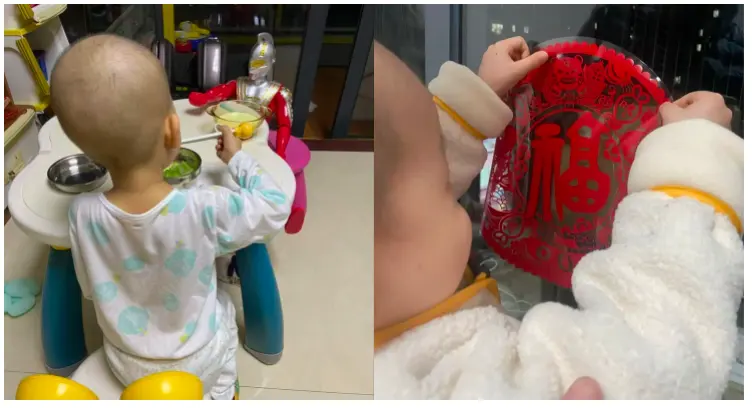 Photo courtesy of Lin Wan
After Leukemia Treatment, Another Rare Diagnosis: Moyamoya Disease
I thought finishing leukemia treatment meant we had finally reached the end of the road. Then life gave us another problem to solve.
In early 2025, my son's mouth suddenly drooped to one side and he began drooling, almost like a stroke. My first fear was that the leukemia had relapsed and involved the central nervous system. Lumbar puncture and MRI evaluation ruled out CNS leukemia. We then went from hospital to hospital looking for an explanation. One doctor thought it might be epilepsy and recommended long-term medication. But after everything I had learned during his leukemia treatment, something did not feel right to me: his symptoms did not fit the typical pattern of epilepsy.
I started researching, reading patient-group discussions, and comparing cases, until I finally took my questions to a hospital specializing in neurological disease. That was when we learned that Xiaojin had moyamoya disease, a rare cerebrovascular disorder. The doctors explained that the "white spots" seen on an MRI three years earlier were not signs of CNS leukemia; they were traces left by repeated small cerebral infarctions. In other words, this condition had been quietly present even while we were focused on leukemia.
After the diagnosis, Xiaojin underwent two cranial surgeries to improve blood flow to the brain. During the first operation, severe bleeding occurred unexpectedly and his condition became critical for a time. The second surgery went smoothly, and he was discharged active and energetic again.
Looking back, I have learned that facing illness takes more than courage. It also takes calm judgment, a willingness to keep learning, and the confidence to think independently and ask questions. Every time we actively searched for an answer, we may have gained precious time for our child.
I Could Never Repay What His Doctors Have Done for Us
When I look back on these five years, one of the things I feel most fortunate about is the doctors we met. They genuinely cared about helping my child get better.
Dr. Huaying LIU from the hematology team was rigorous and professional, but also warm and approachable. Whether I had questions about chemotherapy adjustments or everyday care, she would respond - even when I messaged late at night. During ward rounds, she always remembered how Xiaojin was doing and regularly checked in on him. Later, when he had severe bleeding during brain surgery and I was completely overwhelmed, Dr. Liu was the first person I thought of. Every reply from her helped me steady myself again.
The neurosurgeon who operated on him was the same way. He was down-to-earth and gave me a direct way to stay in touch. If something unusual happened after surgery, he would respond with guidance even late at night. We lived more than a thousand kilometers away, but those messages made me feel as though the doctor was still nearby.
Meeting doctors like these has been an enormous blessing for our family. I don't think a lifetime would be enough to express how grateful I am.
Staying in the Light - and Becoming a Light for Someone Else
Xiaojin is now in second grade. He is a little more prone to colds than some other children, but overall he is doing well. In July 2026, he reached five years from his leukemia diagnosis, and his follow-up results were all reassuring.
People often ask me: if your child is doing well now, why do you still stay involved in patient groups? My answer is that you cannot erase what happened simply by leaving the community or pretending to forget it. If I stay, keep learning, and help newly diagnosed families understand where to start, maybe they can avoid some of the detours we had to take.
Years ago, I happened to help a child I had never met. I never imagined that the kindness I put into the world would eventually circle back and help guide my own son. There is something remarkable about the way people support one another.
Practical Lessons I Would Share with Other Families
1. Don't make major decisions in a rush immediately after diagnosis - first find a team with the right expertise. Learn about experienced pediatric hematology centers, their treatment approaches, and their clinical experience. The right team can help your child avoid unnecessary detours and risks.
2. Take infection prevention seriously. The period when blood counts are at their lowest during chemotherapy is a high-risk time for infection. Careful disinfection, changing clothes before entering the child's room, and limiting visitors may feel excessive, but prevention can spare a child the additional suffering and treatment burden that a serious infection can bring. Follow the infection-control advice of your child's medical team.
3. If unexplained symptoms appear, keep asking questions and seek appropriate evaluation. After treatment or after stopping therapy, symptoms such as unexplained weakness in an arm or leg, facial weakness, or dizziness should prompt medical assessment. In addition to checking for hematologic relapse, neurological or vascular causes may also need to be considered.
4. A basic understanding of the disease can help families participate more confidently in decisions. You do not need to become a medical expert, but it helps to understand the basic disease subtype, commonly used treatments, and major assessment milestones. That background can make conversations with the medical team clearer and help you ask the questions that matter for your child.
5. When you have the capacity, share what you have learned. Patient communities have a remarkable way of coming full circle. A piece of information or encouragement you offer another family today may one day return in a form you never expected. Helping one another can make a difficult road a little easier.
There is still a long road ahead. As long as my child can run and laugh, and we can still eat meals and take walks together, I don't consider us defeated. For the days ahead, we will simply live well. One step forward is one step won.